How Insulin Resistance Can Accelerate Aging Before Diabetes Ever Appears


Discover how insulin resistance silently drives chronic inflammation and accelerates your biological aging before diabetes ever appears.
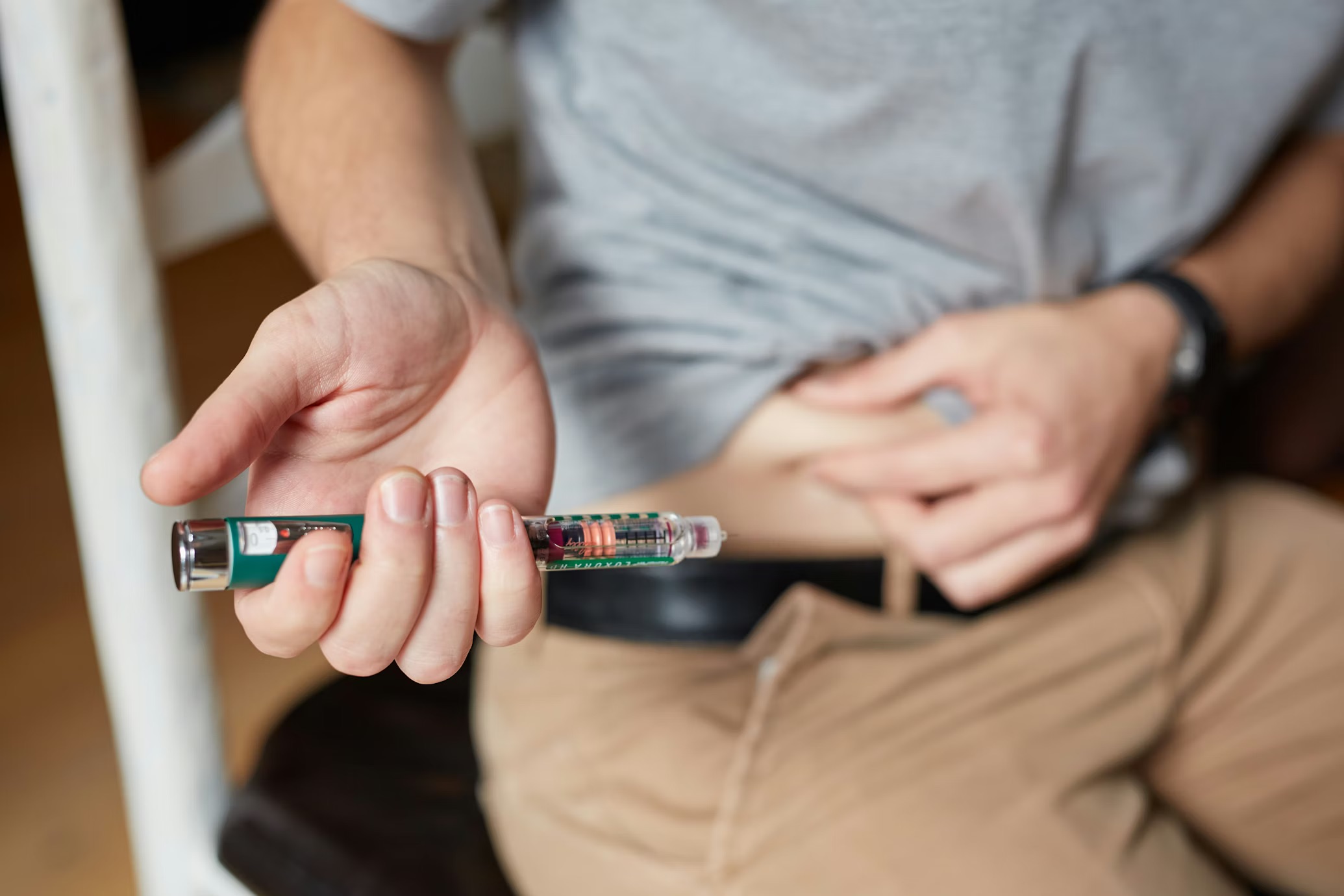
When most people hear "insulin resistance", chances are their mind goes straight to a scary place: diabetes. And that makes sense, because that's almost always the context it appears in. But framing insulin resistance purely as a diabetes risk misses something important: long before it ever becomes diabetes, insulin resistance is quietly accelerating how fast your body ages.
What Is Insulin Resistance?
Insulin is a hormone produced by the pancreas. Its goal is to act as a key, unlocking your cells so they can absorb glucose from the bloodstream and use it for energy.
Insulin resistance is what happens when that key stops working properly. Your cells become less responsive to insulin's signal, so glucose doesn't get absorbed as efficiently. In response, the pancreas tries to compensate for the glucose malabsorption by producing more and more insulin to get the job done.
For a while, blood sugar levels stay normal, because the pancreas is working overtime to keep up. This is why standard blood tests can show completely normal glucose and HbA1c readings in someone who is already insulin resistant.
Over time, if nothing changes, this compensation is no longer working, and blood sugar begins to rise. That's when insulin resistance becomes prediabetes, and eventually type 2 diabetes. Insulin resistance is thought to precede the development of type 2 diabetes by as much as 10 to 15 years ("Insulin Resistance"). And during all of that time, something else is also happening: your body starts to age faster than it should.

How Common Is It?
More common than most people realise.
A 2021 analysis of US health data found that 40% of adults aged 18 to 44 are insulin-resistant based on standard HOMA-IR measurements ("Insulin Resistance"). That's not an issue confined strictly to older, overweight populations. It can also affect young adults. It affects people who exercise. It affects people whose annual blood test comes back as normal.
Insulin resistance exists on a spectrum, which means you don't suddenly become insulin-resistant one day. It develops gradually, driven by lifestyle factors like poor sleep, high-sugar diets, chronic stress, and prolonged sitting.
The Aging Connection: It's About Inflammation, Not Just Blood Sugar
The link between insulin resistance and accelerated aging isn't primarily about high blood sugar. It's about chronic inflammation.
When cells become resistant to insulin, the body's inflammatory signalling goes into overdrive. Insulin resistance activates key inflammatory pathways, including NF-κB, a transcription factor that triggers inflammatory responses across multiple organs, not just the metabolic ones (Chung et al.). The result is a state of low-grade, systemic chronic inflammation that spreads well beyond the liver, pancreas, and muscle tissue.
This type of inflammation is persistent, low-level, and in most cases, largely symptomless. It is exactly what researchers have identified as one of the primary drivers of biological aging. It's so central to the aging process that scientists have given it a name: inflammaging.
This relationship also works in the other direction. Chronic inflammation impairs mitochondrial function, disrupts adipose tissue, and causes cellular stress, all of which worsen insulin resistance further (Chung et al.). The two conditions feed each other in a loop that, if left unchecked, can accelerate the aging process across virtually every system in the body.
The Effect of Inflammaging on Your Immune System and How to Measure It
Your immune system keeps a molecular record of its inflammatory activity, and that record is written in glycans.
Glycans are complex sugar molecules attached to antibodies, specifically to immunoglobulin G (IgG), the most abundant antibody in your blood. Their composition acts as a switch: certain glycan structures make IgG pro-inflammatory, while others make it anti-inflammatory. The balance between them reflects the overall inflammatory status of your immune system over time.
As insulin resistance drives chronic inflammation, this balance shifts. Pro-inflammatory glycan structures accumulate. Anti-inflammatory ones decline. IgG has a half-life of around two to three weeks, compared to just hours for many other inflammation markers. This means glycans reflect what has been happening in your body over a sustained period, not just in the last 24 hours.
A large study analysing IgG glycosylation across more than 5,000 individuals found that virtually all traits most strongly associated with GlycanAge, including insulin levels, HbA1c, BMI, and triglycerides, are the same traits associated with metabolic dysfunction and unhealthy lifestyle patterns (Kristić et al.). Insulin, specifically, is one of the strongest independent correlates of biological age as measured by glycans.
Even more strikingly, a 2021 prospective longitudinal study published in BMJ Open Diabetes Research & Care profiled the plasma N-glycome (the complete collection of sugar molecules attached to proteins in your blood) of 534 women over an average of seven years. Researchers found that glycan changes were detectable up to 10 years before a diagnosis of insulin resistance or type 2 diabetes, and that these changes were continuous and progressive, becoming more pronounced as the eventual diagnosis approached (Cvetko et al.).
Why “Normal” Bloodwork Wouldn’t Tell the Full Story
It's a reasonable assumption: if your blood test is normal, you're fine.
But standard panels are designed to detect established disease, not the years of inflammatory buildup that precede it. Fasting glucose and HbA1c don't become abnormal until the pancreas can no longer compensate. By that point, insulin resistance may have been present for a decade or more ("Insulin Resistance").
Research from the Insulin Resistance Atherosclerosis Study, which examined more than 1,000 non-diabetic adults, found that elevated inflammatory markers were clearly related to insulin resistance even in people without any diagnosis (Festa et al.). Subclinical inflammation tracked directly with the number of metabolic risk factors a person had. More components of metabolic dysfunction meant higher inflammation, regardless of whether blood sugar levels had moved.
In this way, two things can be true at the same time: your fasting glucose can stay perfectly normal, and your immune system can still shift towards an older, more inflamed biological profile.

The Good News: Glycans Respond to Change
What the research consistently shows is that glycans respond to lifestyle changes, dietary shifts, and pharmacological interventions alike. This has been demonstrated across multiple types of studies, making them one of the most responsive and reliable markers of biological change available.
A 2024 study in the Glycoconjugate Journal found that even moderate but regular exercise significantly lowered GlycanAge, and that shifting body composition away from visceral fat, a major driver of insulin resistance, was associated with a shift towards an anti-inflammatory glycan profile (Pezer et al.). The biological age clock moved backwards, without any medical intervention.
In cases where a more significant metabolic change was needed, the evidence is equally encouraging. A study on bariatric surgery patients, published in the International Journal of Obesity, found that substantial weight loss led to measurable improvements in IgG glycan profiles (Vučković et al.). Pro-inflammatory glycan structures decreased, anti-inflammatory ones increased, and biological age improved meaningfully.
Menopause and Insulin Resistance: Why the Timing Matters
Everything described above applies to the general population. But for women going through perimenopause and menopause, there is an additional layer that makes the picture significantly more urgent.
For most of their adult lives, women have a hormonal advantage when it comes to metabolic health. Estrogen actively supports insulin sensitivity, helping cells respond efficiently to insulin's signals and keeping glucose metabolism stable. This is one of the reasons premenopausal women tend to have lower rates of insulin resistance and metabolic syndrome than men of the same age (Mauvais-Jarvis et al.).
Then, during the menopause transition, estrogen levels begin to decline. As they do, that protective effect starts to fade. The body gradually becomes less responsive to insulin, not because of any change in diet or lifestyle, but because the hormonal environment that was supporting healthy glucose metabolism has shifted. Research published in the American Journal of Pathology confirms that this protection disappears with the onset of menopause, with postmenopausal women showing significantly higher levels of insulin resistance compared to their premenopausal counterparts, and the gap between women and men narrowing considerably in the process (Mauvais-Jarvis et al.).
A 2025 study comparing 948 women with normal menstrual cycles against early menopausal women under 50 found that the early menopausal group had a significantly higher rate of insulin resistance, with waist-to-hip ratio emerging as the most important predictor (Chen et al.). Many of these women had no clinical diagnosis and no obvious warning signs. The biological shift was happening beneath the surface of what standard medicine was measuring.
This is precisely where glycan testing becomes particularly relevant. Since glycans track the inflammatory environment over time, they can capture the accelerated biological aging that occurs when declining estrogen and rising insulin resistance converge. Research has shown that women going through perimenopause and menopause show measurable shifts in their glycan profile consistent with increased chronic inflammation and accelerated biological age (Kristić et al.; Cvetko et al.).
What This Means for You
If there is one thing to take away from this article, it is this: you do not need a prediabetes or diabetes diagnosis to be aging faster than you should. If you are a woman in the menopause transition, the stakes are even higher.
Insulin resistance operates silently across a large portion of the population, driving chronic inflammation and shifting the glycan balance towards an older, more pro-inflammatory profile.
If you want to understand how your metabolism is affecting the way you are aging, and whether your lifestyle choices are actually making a difference, a GlycanAge test can measure your inflammation levels directly, and our team will provide you with a personalised plan on how to reduce inflammation in your body and optimise your health to help prevent potential conditions down the line.
Sources:
Chen, et al. "The Comparison of Insulin Resistance Between Normal and Early Menopause Women Younger than Fifty Years Old by Machine Learning Methods." Diagnostics, vol. 15, no. 16, 2025, www.mdpi.com/2075-4418/15/16/2074.
Chung, Hae Young, et al. "Age-Related Inflammation and Insulin Resistance: A Review of Their Intricate Interdependency." Archives of Pharmacal Research, vol. 37, no. 12, 2014, pp. 1507-1514, link.springer.com/article/10.1007/s12272-014-0474-6.
Cvetko, Ana, et al. "Plasma N-Glycome Shows Continuous Deterioration as the Diagnosis of Insulin Resistance Approaches." BMJ Open Diabetes Research & Care, vol. 9, no. 1, 2021, pmc.ncbi.nlm.nih.gov/articles/PMC8438737/.
Festa, Andreas, et al. "Chronic Subclinical Inflammation as Part of the Insulin Resistance Syndrome: The Insulin Resistance Atherosclerosis Study (IRAS)." Circulation, vol. 102, no. 1, 2000, pp. 42-47, www.ahajournals.org/doi/10.1161/01.cir.102.1.42.
Kristić, Jasminka, et al. "Glycans Are a Novel Biomarker of Chronological and Biological Ages." The Journals of Gerontology, Series A: Biological Sciences and Medical Sciences, vol. 69, no. 7, 2014, pp. 779-789, pmc.ncbi.nlm.nih.gov/articles/PMC4049143/.
Pezer, Marija, et al. "Regular Moderate Physical Exercise Decreases Glycan Age Index of Biological Age and Reduces Inflammatory Potential of Immunoglobulin G." Glycoconjugate Journal, vol. 41, 2024, pp. 1-12, link.springer.com/article/10.1007/s10719-023-10144-5.
Vučković, Frano, et al. "Extensive Weight Loss Reduces Glycan Age by Altering IgG N-Glycosylation." International Journal of Obesity, vol. 45, 2021, pp. 1521-1531, www.nature.com/articles/s41366-021-00816-3.
"Insulin Resistance." StatPearls, NCBI Bookshelf, 2023, www.ncbi.nlm.nih.gov/books/NBK507839/.



Vitamin D3's Role in Chronic Disease Prevention
Learn why Vitamin D3 is essential for optimizing health and managing diseases like cancer and diabetes.
Published:March 4, 2025
 Reading time:
15 minutes

High Sensitivity C-Reactive Protein (hsCRP): Explained
Learn about the high-sensitivity C-reactive protein (hsCRP) test and its significance in detecting inflammation and assessing heart disease risk.
Published:May 27, 2024
Reading time:10 minutes